



Which Candle smells the strongest? For buyers sourcing Candles for retail, hospitality, gifting, or private-label collections, the answer depends on more than fragrance concentration. Candles made with different waxes, fragrance oils, wick designs, and manufacturing processes can produce noticeably different scent experiences, even when they use the same fragrance. Both the initial aroma of an unlit candle and the fragrance released during burning influence how consumers perceive scent strength.
For wholesalers, importers, and private-label brands, understanding these variables is essential when comparing products from a candle manufacturer. A candle that smells powerful in its packaging may deliver disappointing performance when lit, while a well-formulated product can provide a balanced and consistent fragrance experience. Evaluating scent throw, raw material compatibility, production controls, and quality testing helps buyers select candles that meet market expectations without compromising burn quality or product safety.
1. Which Types of Candles Usually Have the Strongest Scent?
Highly Scented Candles formulated with compatible fragrance oils and suitable wax systems often deliver stronger perceived aromas than products designed primarily for decorative purposes. However, no single wax type or candle format guarantees the strongest scent. The final result depends on the complete formulation and how effectively the fragrance is released during use.
Paraffin candles are widely used in commercial candle production because paraffin can accommodate many fragrance formulations and offers flexibility in product development. Properly formulated paraffin candles can provide strong hot throw, making them suitable for mass-market Scented Candles, seasonal collections, and promotional products.
Soy wax candles appeal to brands seeking plant-based wax options. Their fragrance performance depends on the specific wax blend, fragrance compatibility, wick selection, and curing conditions. A well-developed soy candle can provide excellent scent performance, although some formulations require additional testing to achieve the desired fragrance intensity.
Blended wax candles combine materials to balance fragrance release, surface appearance, burn characteristics, and production consistency. For B2B buyers, these products can offer flexibility when developing a private-label collection with specific performance and cost requirements.
Beeswax candles and unscented decorative candles serve different purposes. Beeswax has a naturally distinctive aroma that may influence fragrance perception, while unscented candles are generally unsuitable when strong added fragrance is the primary purchasing requirement.
Rather than selecting candles by wax type alone, buyers should compare finished samples under consistent conditions, considering both cold throw and hot throw.
2. Cold Throw vs. Hot Throw: How Is Candle Scent Strength Measured?
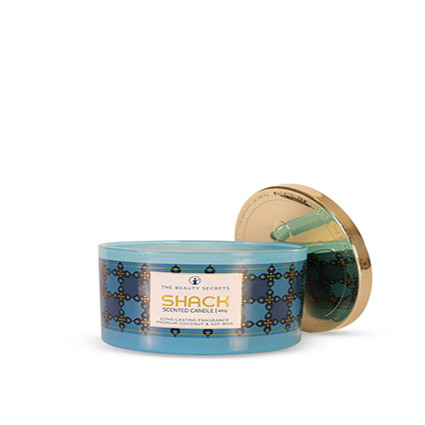
Cold throw describes the fragrance released by an unlit candle. It influences the first impression customers receive when opening a package, inspecting a product display, or browsing a scented candle collection. Hot throw refers to the fragrance released while the candle burns, making it particularly important for consumers who want to scent a room.
These two characteristics are related but not interchangeable. A candle may have a strong cold throw because its fragrance composition releases noticeable aromatic compounds at room temperature. During burning, however, heat changes the rate at which fragrance components evaporate and disperse. The resulting scent can be stronger, weaker, or simply different from the unlit aroma.
Fragrance composition also matters. Some fragrance ingredients are highly volatile and become noticeable quickly, while others evaporate more slowly or contribute to the depth and persistence of the scent. A fragrance perceived as intense immediately after lighting may not remain equally noticeable throughout the burn cycle.
For wholesale evaluation, a candle supplier should be able to distinguish between fragrance concentration and actual scent performance. Comparing products by fragrance load alone can be misleading because different oils contain different aromatic materials and interact differently with wax.
A practical evaluation should record the initial unlit aroma, scent development after lighting, fragrance distribution over time, and any undesirable changes such as excessive smokiness or an unpleasant burnt note.
3. How Fragrance Load Affects Scent Strength and Product Quality
Fragrance load is commonly expressed as the percentage of fragrance oil relative to the wax weight, although manufacturers may use different calculation conventions. Increasing fragrance load can improve scent intensity when the wax system can retain and release the additional fragrance effectively. Nevertheless, adding more fragrance does not automatically produce a stronger or better candle.
Every wax formulation has practical compatibility limits. When fragrance oil exceeds the level that a particular wax can incorporate reliably, the candle may develop oil sweating, surface droplets, uneven appearance, poor structural stability, or inconsistent burning. Excessive fragrance can also interfere with wick performance and increase the risk of undesirable combustion behavior.
During formulation development, a candle factory should evaluate several fragrance-load levels rather than selecting the highest possible percentage. The objective is to identify the concentration that balances scent strength, fragrance stability, appearance, and burn performance.
Testing should include observations after the candle has cooled and completed its intended curing period. Manufacturers should check for oil separation, frosting or surface changes where relevant, container compatibility, and fragrance consistency across samples.
For B2B buyers, the most useful specification is not simply a high fragrance-load figure. It is a documented formulation that demonstrates repeatable scent performance and acceptable finished-product quality.
4. The Manufacturing Process: Why Wax Preparation and Fragrance Mixing Matter
Strong candle fragrance begins with controlled formulation and processing. Even when a manufacturer uses a high-quality fragrance oil, poor temperature management or inconsistent mixing can reduce batch uniformity.
Wax melting and temperature control: Wax must be heated sufficiently to melt and prepare it for mixing, while avoiding unnecessary exposure to excessive temperatures. The appropriate temperature range depends on the wax system and supplier guidance. Overheating or prolonged heating may affect fragrance stability, color, and processing characteristics.
Fragrance incorporation: Fragrance oil should be added at a temperature appropriate for the selected wax and fragrance formulation. Mixing time and agitation must be controlled so that the oil is distributed consistently throughout the batch. Insufficient mixing can contribute to variation between candles, while unsuitable processing conditions may increase fragrance loss or introduce unwanted air bubbles.
Pouring and cooling: Pouring temperature influences surface finish, adhesion to container walls, crystallization, and the internal structure of the candle. Cooling conditions can affect sinkholes, cracks, frosting, and other visual defects. Although these defects do not always indicate weak fragrance, they may signal that the production process requires adjustment.
Curing: After pouring, many scented candles benefit from a controlled curing period before final evaluation. The appropriate duration varies by wax, fragrance, and formulation. Curing allows the finished candle to stabilize and provides a more meaningful basis for comparing scent performance. Buyers should confirm that samples are evaluated after a consistent curing period rather than comparing candles of different ages.
For consistent results, manufacturers should record critical process parameters, maintain batch traceability, and use approved formulations. These controls make it easier to identify why one production lot performs differently from another.
5. Wick Selection and Combustion: The Hidden Factors Behind Strong Hot Throw
The wick plays a central role in determining how a candle releases fragrance during burning. It draws liquid wax into the flame, where heat melts the surrounding wax pool and promotes the release of volatile fragrance components.
A wick that is too small for the candle diameter or formulation may produce a limited melt pool and insufficient heat for the intended fragrance performance. This can lead to weak hot throw, tunneling, and uneven wax consumption.
Conversely, an oversized wick can generate excessive heat, a flame that is too large, increased soot, or rapid fuel consumption. Although a hotter-burning candle may release fragrance more quickly under some conditions, excessive heat does not necessarily improve the overall scent experience. It can also create safety and quality concerns.
Wick selection must therefore account for candle diameter, wax composition, fragrance load, dye, container design, and the intended burn profile. A wick that performs well in an unscented paraffin candle may not work equally well in a heavily fragranced soy blend.
During development, manufacturers should conduct repeated burn tests, documenting flame behavior, melt-pool development, container temperature, visible soot, and remaining wax. Scent evaluations should take place alongside these checks rather than being treated as a separate marketing exercise.
6. Fragrance Oil Selection and Quality Control
Not all fragrance oils perform equally in candles. Their aromatic composition, volatility, compatibility with wax, and stability under heat can all influence the finished product. A fragrance that smells strong in a bottle may not retain the same character after incorporation into wax and exposure to a burning flame.
Professional candle manufacturers should assess fragrance oils for suitability in the intended wax system and end-use application. Supplier documentation, batch consistency, and applicable safety information are important parts of this process. Fragrance oils intended for other applications should not automatically be assumed suitable for candle production.
Quality control should examine more than the strength of the fragrance. The finished candle should be checked for consistency of scent character, unexpected chemical or burnt odors, discoloration, oil separation, and changes during storage. Packaging materials should also be evaluated because some materials can absorb fragrance or allow volatile components to escape over time.
For private-label and wholesale projects, buyers should request clear fragrance descriptions, agreed sample references, and defined acceptance criteria. If a supplier changes the fragrance oil source or formulation, the finished candle may require renewed performance testing before production approval.
7. Essential Testing Procedures for Strongly Scented Candles
A reliable testing program helps determine whether a candle delivers the expected fragrance consistently and burns acceptably. Testing methods should be repeatable, documented, and appropriate to the product type.
Cold-throw evaluation: Inspect fully cured candles under consistent room conditions. Use the same evaluation environment, exposure time, and assessment criteria for every sample. This helps reduce the influence of temperature, ventilation, and evaluator expectations.
Hot-throw evaluation: Burn candles using a controlled protocol in a suitable, ventilated testing area. Assess fragrance after defined intervals rather than relying on a single impression immediately after lighting. Room size, air movement, candle placement, and burn duration should be standardized because each can affect perceived intensity.
Burn-performance testing: Monitor flame stability, melt-pool development, wick condition, soot, container integrity, and total burn behavior. Strong fragrance is not an acceptable substitute for safe and stable combustion.
Batch consistency checks: Compare samples from different production runs against an approved reference. Where appropriate, retain samples and record wax batch, fragrance batch, wick specification, pouring conditions, and curing duration. This documentation supports root-cause analysis when a customer reports weaker fragrance or inconsistent performance.
Storage and packaging checks: Evaluate whether fragrance characteristics remain acceptable after the intended storage period and packaging exposure. Transport conditions, temperature fluctuations, and packaging permeability may influence product quality before the candles reach retailers.
Buyers should also confirm that finished products meet applicable market requirements, including relevant candle safety, labeling, and chemical documentation obligations.
8. How B2B Buyers Should Compare Candle Manufacturers and Suppliers
When sourcing strongly scented candles, procurement teams should evaluate a manufacturer's technical capability alongside pricing, minimum order quantities, and delivery reliability. A low unit price may be less attractive if scent strength varies significantly between batches or if the product requires repeated reformulation.
Ask prospective candle manufacturers whether they can provide samples made with the intended wax, fragrance, wick, container, and packaging specifications. Samples should represent the proposed production formula rather than an unrelated stock product.
Useful questions include:
Which wax formulations are available, and how is fragrance compatibility assessed?
What fragrance-load range has been validated for the proposed candle design?
How are pouring temperature, mixing, cooling, and curing controlled?
Are cold throw, hot throw, and burn performance evaluated using documented procedures?
How does the factory maintain consistency between approved samples and bulk orders?
Can the supplier support private labeling, custom fragrances, packaging development, and batch traceability?
Reliable candle suppliers should explain their process clearly and identify the performance characteristics they can demonstrate. Buyers should compare quotations using equivalent specifications, including candle weight, fragrance, container, packaging, testing requirements, and order volume.
For large-volume purchases, a pre-production sample and written product specification help reduce misunderstandings. Buyers should also agree on how fragrance deviations, defective products, and formulation changes will be handled.
9. Conclusion: The Strongest-Smelling Candle Is the Best-Engineered One
The candles that smell the strongest are not necessarily those with the highest fragrance concentration or the most powerful unlit aroma. Strong, consistent scent performance results from the interaction of fragrance composition, wax compatibility, controlled manufacturing, appropriate curing, and correct wick selection.
For importers, wholesalers, and private-label brands, the most effective sourcing strategy is to compare finished candles under standardized conditions and verify both fragrance performance and burn quality. A capable candle manufacturer should be able to explain how its formulation and production controls support repeatable results, rather than relying solely on fragrance-load claims.
By evaluating cold throw, hot throw, manufacturing consistency, and documented quality checks together, B2B buyers can identify products that meet customer expectations and support long-term brand reputation. The strongest commercial choice is ultimately a candle that delivers the intended fragrance experience reliably, safely, and consistently across production batches.